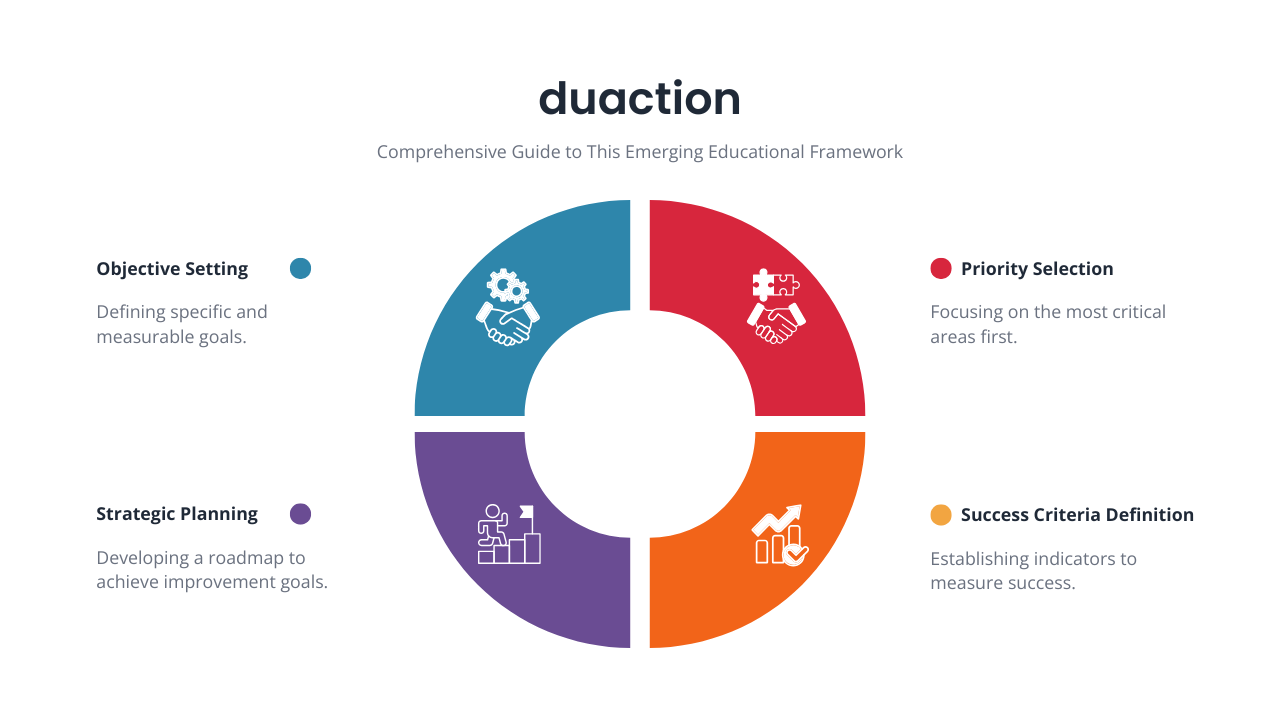
Duaction represents an emerging educational framework addressing fundamental challenges in how knowledge is transmitted and acquired in contemporary learning environments. The term, combining “dual” and “action,” describes an approach fundamentally different from traditional educational models that separate theoretical instruction from practical application. Rather than first teaching concepts through lectures and then assigning practice problems or projects to reinforce those concepts, Duaction integrates theory and practice simultaneously, allowing students to apply theoretical knowledge to real-world tasks while they’re learning the underlying concepts.
In an era where educators, researchers, and employers increasingly recognize gaps between what students learn in classrooms and what they can actually apply in professional or practical contexts, Duaction offers an alternative framework addressing these challenges. The approach reflects broader educational shifts toward experiential learning, project-based education, and constructivist pedagogies that emphasize students actively building understanding rather than passively receiving information.
Understanding Duaction requires examining how it differs from traditional educational approaches, exploring the theoretical foundations supporting its effectiveness, investigating implementation strategies across different educational levels and disciplines, considering potential benefits and challenges, and appreciating its role within broader contemporary educational innovation. This comprehensive exploration provides insight into this emerging framework and its implications for how education might evolve to better prepare learners for complex real-world challenges.
Table of Contents
ToggleDefining Duaction: Core Concepts and Framework
The Etymology and Conceptual Foundation
Duaction emerges from combining two core educational concepts represented in its name:
“Dual”: This element emphasizes the simultaneous nature of the approach—dual not as “two separate” but as integrated duality. The duality refers to the two knowledge domains operating simultaneously: theoretical knowledge and practical application. Rather than sequentially addressing these separately, Duaction maintains both operating together throughout the learning process.
“Action”: This component emphasizes active engagement, hands-on doing, and practical application. The term suggests that learning occurs through action—through engagement with real-world tasks and problems rather than through passive reception of information.
Combined, Duaction describes a framework where theoretical knowledge development and practical action occur simultaneously and interdependently. Students don’t first complete theory units then move to application; instead, they engage with real-world tasks while developing underlying theoretical understanding.
How Duaction Differs from Traditional Education
Understanding Duaction requires contrasting it with traditional educational approaches:
Traditional Sequential Model:
- Lecture/Instruction Phase: Teacher explains concepts, theories, principles
- Practice Phase: Students complete assignments reinforcing lecture content
- Application Phase: Optional projects applying concepts to realistic scenarios
- Assessment: Testing knowledge recall and understanding
This sequential approach separates instruction from application, assuming students master concepts before applying them.
Duaction Integrated Model:
- Authentic Task Presentation: Students encounter real-world problem or task
- Simultaneous Learning: While working on authentic task, students learn relevant theory needed for task completion
- Iterative Development: Theory and practice inform each other as students progress
- Integrated Assessment: Evaluation occurs throughout as students apply developing knowledge
This integrated approach interweaves instruction with authentic application from the beginning.
Theoretical Foundations
Duaction draws from well-established educational theories:
Constructivism: The theory that learners actively construct understanding rather than passively receiving information. Duaction’s integration of action with learning reflects constructivist principles that knowledge is built through active engagement.
Experiential Learning: Kolb’s experiential learning cycle emphasizing concrete experience, reflective observation, abstract conceptualization, and active experimentation. Duaction incorporates all these elements, with authentic tasks providing concrete experience while theory provides abstract conceptualization.
Situated Learning: Lave and Wenger’s concept that learning occurs in context. Duaction’s emphasis on real-world tasks ensures learning occurs in authentic situations rather than decontextualized classroom settings.
Project-Based Learning: Educational approach where students engage with extended projects addressing real challenges. Duaction incorporates project-based elements, using real tasks to drive theoretical learning.
Scaffolding: Vygotsky’s concept of providing support enabling learners to achieve beyond current capabilities. Duaction scaffolds learning by providing theory and guidance as needed for real-world task completion.
Core Principles of Duaction
Several principles characterize the Duaction framework:
Integration Over Separation: Theory and practice aren’t separated but integrated throughout learning.
Authenticity: Tasks are authentic, real-world problems rather than contrived classroom exercises.
Simultaneity: Theoretical learning and practical application occur together rather than sequentially.
Active Engagement: Students actively work on meaningful tasks rather than passively receiving information.
Contextual Relevance: Learning is embedded in authentic contexts where knowledge will be applied.
Iterative Development: Understanding develops iteratively through cycles of action and reflection.
How Duaction Works: Implementation and Process
The Duaction Learning Cycle
Duaction typically operates through iterative cycles:
1. Authentic Task Presentation: Students encounter real-world problem or task requiring theoretical knowledge they don’t yet fully possess. The task is sufficiently complex to require theoretical understanding.
2. Initial Action: Students begin working on the task with existing knowledge, quickly discovering gaps requiring new learning.
3. Targeted Instruction: Based on task requirements, instruction addresses specific theoretical knowledge needed. Rather than comprehensive lecture, instruction is focused and justified by task needs.
4. Application and Problem-Solving: Students apply newly learned theory to advance work on the authentic task.
5. Reflection and Iteration: Students reflect on how theory improved their task performance, understanding grows, and they return to task work with enhanced understanding.
6. Refinement: As understanding develops, students refine their work on the authentic task, applying theory more sophistication.
This cycle repeats as tasks become more complex and theoretical understanding deepens.
Real-World Task Integration
Central to Duaction is integration of real-world tasks:
Authentic Problems: Tasks address genuine problems or challenges rather than contrived exercises. A writing class might involve actually writing for real audiences (publications, organizations) rather than writing essays for teacher evaluation only.
Meaningful Outcomes: Task completion produces meaningful results—actual products, solutions, or contributions rather than assignments existing only for grade purposes.
Complexity and Challenge: Tasks are sufficiently complex to require genuine problem-solving and theoretical knowledge application.
Stakeholder Involvement: Where possible, actual stakeholders—clients, users, communities—are involved, making tasks genuinely authentic.
Progressive Complexity: Tasks build in complexity as students develop theoretical knowledge and practical capabilities.
Simultaneous Theory and Practice
The simultaneity distinguishing Duaction involves:
Just-in-Time Learning: Theory is taught precisely when needed for task progress, making its relevance obvious.
Theory Justification: Students understand why theory matters because they immediately need it for authentic task work.
Practical Context for Theory: Rather than abstract theory divorced from application, theoretical knowledge is presented in context of immediate practical need.
Feedback Loops: Attempting to apply theory to real tasks provides immediate feedback about understanding, identifying gaps requiring additional instruction.
Reciprocal Development: Theory informs task performance; task engagement deepens theoretical understanding.
Duaction Across Educational Levels and Disciplines
Primary and Secondary Education Applications
In K-12 settings, Duaction manifests through:
Project-Based Learning: Science classes investigate actual environmental problems while learning scientific theory. Students might design water filtration systems while learning chemistry principles.
Authentic Writing: Writing instruction integrates real writing purposes—creating publications, writing for actual audiences—with grammar, rhetoric, and composition theory.
Historical Investigation: History students investigate real historical questions and controversies while learning historical analysis methods and theoretical frameworks.
Mathematical Problem-Solving: Mathematics learning through solving real problems—designing efficient spaces, analyzing sports statistics—while learning mathematical concepts.
Technology and Design: Students create actual functional products or systems while learning underlying technical and design theory.
The advantage at K-12 levels is that authentic tasks can be genuinely authentic without requiring professional-level outcomes—creating a school newspaper is authentic writing; designing a playground is authentic engineering.
Higher Education Applications
Universities implement Duaction through:
Capstone Projects: Final projects addressing real professional challenges while students complete theoretical coursework. Rather than separate capstone, theory is integrated throughout.
Service Learning: Students address community problems while learning relevant theory—engineering students design water systems for communities while learning civil engineering principles.
Research Participation: Students engage in actual research while learning research methodology and theoretical frameworks.
Professional Internships: Students work in professional contexts while completing coursework, with work tasks and academic learning integrated.
Case-Based Learning: Medical, law, and business education use actual cases, with students learning theory needed to address case challenges.
Consulting Projects: Students work on real client projects while learning business or technical theory needed for successful consultation.
Professional and Continuing Education
Beyond traditional education, Duaction applies to:
On-the-Job Training: Rather than classroom training followed by application, new employees learn while working on actual tasks, with supervision and just-in-time instruction.
Professional Development: Instead of disconnected training workshops, professionals develop new capabilities through project engagement with integrated learning support.
Apprenticeships: Traditional apprenticeship models exemplify Duaction—learning occurs through working on actual tasks under expert guidance.
Corporate Training: Organizations increasingly replace classroom training with project-based work where learning occurs through task engagement.
Benefits and Advantages of Duaction
Increased Learning Effectiveness
Research and experience suggest Duaction improves learning outcomes:
Deeper Understanding: When students apply theory to real problems immediately, understanding tends to be deeper than when theory is learned abstractly before application.
Better Retention: Knowledge learned through authentic application is retained better than knowledge learned passively. The meaningful context aids memory and recall.
Transfer of Learning: When students learn theory in authentic contexts, they’re better able to transfer learning to new contexts—the goal of education.
Active Engagement: Duaction’s action component increases cognitive engagement, attention, and motivation compared to passive learning.
Problem-Solving Development: Working on authentic problems develops genuine problem-solving capabilities beyond test-taking skills.
Motivation and Engagement
Duaction addresses motivational challenges in traditional education:
Relevance: When students understand immediate relevance of learning to meaningful tasks, motivation increases significantly.
Agency: Students experience genuine agency—their work matters, their decisions affect outcomes, they see direct results of their effort.
Interest Alignment: Real-world tasks often align with student interests more than traditional curricula, increasing intrinsic motivation.
Meaningful Outcomes: Completing authentic tasks provides sense of accomplishment and meaningful product beyond grades.
Emotional Investment: When students care about task outcomes, emotional investment increases learning effectiveness.
Preparation for Real-World Contexts
Duaction better prepares students for professional and life contexts:
Authentic Skills: Skills developed through real-world task engagement transfer more directly to professional and life contexts.
Practical Knowledge: Theoretical knowledge developed through application to real problems is more practically useful than abstract theory.
Professional Context Understanding: Students experience actual professional contexts, understanding workplace realities and expectations.
Network Building: Working on real tasks often involves interaction with professionals and stakeholders, building networks valuable for career development.
Portfolio Development: Real-world projects create portfolios demonstrating actual capabilities to potential employers.
Interdisciplinary Integration
Duaction naturally facilitates interdisciplinary learning:
Complex Problems: Real-world problems typically require knowledge from multiple disciplines. A sustainable housing project requires engineering, environmental science, social science, and business knowledge.
Theory Integration: Rather than compartmentalized disciplines, Duaction encourages seeing how different theoretical frameworks address complex problems.
Holistic Understanding: Students develop more complete understanding of complex domains through interdisciplinary approach.
Challenges and Considerations
Implementation Complexity
Duaction presents implementation challenges:
Resource Requirements: Real-world projects require resources—materials, access to professionals, community partnerships—beyond traditional classroom requirements.
Time Management: Integrating theory and practice requires careful time management. Tasks cannot be so time-consuming that little theory is learned, nor can theory instruction so dominate that insufficient time remains for meaningful task engagement.
Assessment Difficulty: Assessing integrated learning is more complex than traditional tests. Evaluating both theoretical understanding and practical capability requires sophisticated assessment methods.
Instructor Preparation: Teachers implementing Duaction require different preparation and ongoing support than traditional instruction requires. Facilitating authentic tasks demands different expertise than delivering lectures.
Scalability Concerns: Duaction works well with small classes and intensive oversight but becomes challenging at scale. Managing individual projects for 200+ students presents practical challenges.
Equity and Access Considerations
Duaction raises equity concerns:
Resource Access: Real-world projects may require resources or opportunities not equally available to all students, potentially creating equity gaps.
Background Knowledge: Some students arrive with background knowledge or experiences supporting authentic task engagement better than others.
Learning Pace Variation: Integrating theory and practice works well when students progress at similar paces but becomes challenging with wide variation.
Support Requirements: Some students require more instructional support than authentic task engagement alone provides.
Accessibility: Real-world projects must be accessible to students with disabilities—a challenge sometimes requiring substantial accommodation.
Assessment and Credentialing
Assessment within Duaction presents challenges:
Standardized Assessment Mismatch: Duaction-based learning may not align with standardized testing that emphasizes decontextualized knowledge recall.
Transcription and Credentials: Documenting learning from Duaction on traditional transcripts is challenging. How are integrated projects represented in credentials?
Comparison and Equivalence: Assessing achievement when students complete different authentic projects is more complex than comparing standardized test scores.
Accountability Concerns: Educational institutions and stakeholders may demand traditional accountability measures that don’t capture Duaction learning well.
Teacher and Institutional Barriers
Implementing Duaction requires institutional support:
Teacher Training: Traditional teacher preparation doesn’t prepare teachers for Duaction facilitation. Significant professional development is required.
Institutional Structures: Traditional educational structures—grade levels, courses, schedules, curricula—sometimes conflict with Duaction’s integrated approach.
Administrative Concerns: Administrators and policy makers unfamiliar with Duaction may not recognize its validity or effectiveness.
Standardized Curriculum Pressure: Pressure to cover standardized curricula can conflict with the flexible, responsive approach Duaction requires.
Implementing Duaction: Practical Strategies
Getting Started with Duaction
For educators considering Duaction:
Start Small: Begin with one project or course rather than attempting comprehensive implementation. Small pilots allow refinement before broader adoption.
Choose Authentic Tasks: Select tasks genuinely authentic—addressing real problems or producing real products for real audiences.
Plan Instruction Timing: Carefully plan when to provide instruction so it connects to immediate task needs.
Build Infrastructure: Establish relationships with professionals, organizations, or communities who can support authentic task engagement.
Develop Assessment Methods: Create assessment approaches capturing integrated learning—project portfolios, presentations, client evaluations.
Plan for Variation: Build flexibility for students progressing at different paces through authentic tasks.
Supporting Student Success
Students need support for Duaction success:
Clear Expectations: Explicitly communicate task expectations, standards, and success criteria.
Scaffolding: Provide scaffolding ensuring students can engage with authentic tasks without becoming overwhelmed.
Just-in-Time Instruction: Provide instruction precisely when students need it for task progress.
Feedback and Coaching: Provide regular feedback on both task performance and theoretical understanding development.
Reflection Prompts: Guide reflection connecting theory to practical experience.
Community of Practice: Create classroom communities where students support each other and learn collaboratively.
Technology Integration
Technology can support Duaction:
Project Platforms: Platforms enabling collaborative project work and portfolio development.
Just-in-Time Resources: Online resources providing instruction precisely when needed.
Simulation and Modeling: Technology enabling engagement with authentic scenarios when real-world access isn’t possible.
Documentation Tools: Technology enabling documentation of learning throughout authentic task engagement.
Communication Tools: Platforms facilitating communication with professionals, stakeholders, and peers.
Duaction in Different Contexts
K-12 Education
In schools, Duaction might look like:
Science: Students design solutions to environmental problems (water pollution, plastic waste) while learning chemistry, biology, and environmental science.
Literature and Writing: Students write for real purposes—creating publications, writing for community organizations—while learning literary analysis and composition.
Mathematics: Students solve authentic problems (designing efficient spaces, analyzing data) while learning mathematical concepts.
History and Social Science: Students investigate authentic historical or contemporary questions while learning historical methods and social science theory.
Technology and Engineering: Students design and build actual products while learning engineering and technology principles.
Higher Education
University examples include:
Engineering: Students design solutions to real infrastructure challenges while learning engineering theory.
Business: Students consult with real organizations on authentic business challenges while learning business theory.
Health Sciences: Medical and nursing students engage with actual patients while learning clinical theory.
Education: Teacher candidates teach actual classes while learning educational theory.
Design: Students create designs for real clients while learning design theory.
Professional Contexts
In business and professional development:
Technical Training: New employees learn technical skills while working on actual technical projects.
Leadership Development: Emerging leaders develop capabilities through real leadership projects with support and coaching.
Professional Certification: Professionals develop new expertise through real projects in their fields.
Organizational Change: Organizations implement change initiatives while learning change management theory.
Research and Evidence Supporting Duaction
Educational Research Foundations
Duaction builds on substantial research:
Experiential Learning Research: Decades of research support experiential learning’s effectiveness, showing it produces deeper understanding and better transfer than passive learning.
Project-Based Learning Studies: Research on project-based learning demonstrates improved learning outcomes, motivation, and practical skill development.
Constructivism Research: Research supports constructivist approaches where learners actively build understanding rather than passively receive it.
Situated Learning Studies: Research confirms learning embedded in authentic contexts produces better transfer and retention.
Real-World Application Studies: Research demonstrates learning is more effective when students apply knowledge to realistic problems.
Emerging Research on Integrated Approaches
Newer research specifically examining integrated theory-practice approaches supports Duaction:
Reduced Transfer Gap: Research suggests integrated approaches reduce the gap between classroom learning and real-world application.
Motivation Improvement: Studies document increased motivation when learning is connected to meaningful authentic tasks.
Deeper Conceptual Understanding: Research indicates integrated approaches develop deeper theoretical understanding than separated approaches.
Skill Development: Studies show practical skills develop better through real-world task engagement than through isolated practice.
Implementation Research
Research examining actual implementations provides insight:
Successful Programs: Documentation of successful Duaction-like implementations in various contexts demonstrates feasibility and effectiveness.
Student Outcomes: Research on student outcomes from integrated approaches shows improved learning, motivation, and preparation for professional contexts.
Implementation Challenges: Research identifies common challenges and successful solutions for Duaction implementation.
FAQ: Frequently Asked Questions About Duaction
What does Duaction mean?
Duaction is an educational framework combining “dual” (simultaneous theory and practice) and “action” (hands-on engagement), where students develop theoretical knowledge while immediately applying it to real-world tasks rather than learning theory first then practicing separately.
How is Duaction different from other learning approaches?
Traditional education separates instruction from application—students learn theory through lectures, then practice through assignments. Duaction integrates these, having students work on authentic tasks while learning relevant theory just-in-time. Other approaches like project-based learning share similarities but Duaction specifically emphasizes the simultaneous integration of theory and practice.
What is the theoretical basis for Duaction?
Duaction draws from constructivism (learners build understanding through active engagement), experiential learning (Kolb’s cycle of concrete experience and abstract conceptualization), situated learning (learning in authentic contexts), and scaffolding (providing support for learning). Together these theories support simultaneous theory-practice integration.
Can Duaction be used in all subjects?
Duaction principles can apply across disciplines. While most straightforward in practical subjects (engineering, writing, science), it can work in humanities and social sciences through authentic problems and projects suited to those fields.
What are the main benefits of Duaction?
Key benefits include: deeper learning and better retention, increased motivation through relevance and meaningful engagement, better preparation for real-world contexts, development of practical problem-solving skills, and improved transfer of learning to new situations.
What challenges does Duaction present?
Challenges include: complexity of implementation, resource requirements for authentic tasks, difficulty assessing integrated learning, equity concerns regarding access and support, and institutional barriers in traditional educational structures.
How is assessment different in Duaction?
Rather than traditional tests, assessment in Duaction involves evaluating both theoretical understanding and practical performance through methods like project portfolios, presentations, client evaluations, and reflective work throughout the learning process.
How long does it take students to see benefits from Duaction?
Some benefits appear quickly—increased engagement and motivation often increase immediately. Deeper learning benefits typically develop over weeks and months as students cycle through authentic tasks and reflection. Long-term benefits in transfer and real-world application appear over extended engagement.
What is the role of the teacher in Duaction?
Rather than delivering lectures, teachers facilitate learning by identifying authentic tasks, providing just-in-time instruction as needed, scaffolding student engagement, guiding reflection, providing feedback, and creating learning community. This is substantially different from traditional teaching roles.
Can Duaction work with large classes?
Duaction becomes challenging with very large classes because it requires responsive instruction and individualized scaffolding. However, with careful design using group projects, peer learning, and technology support, Duaction can work with larger classes than traditional project-based learning requires.
How does Duaction address different learning paces?
Duaction accommodates variation through flexible scaffolding—providing additional support to students progressing more slowly and additional challenge to students progressing quickly. Group work allows peers at different paces to learn from each other.
What is the relationship between Duaction and apprenticeship?
Traditional apprenticeship models exemplify Duaction—learning occurs through working on authentic tasks under expert guidance with just-in-time instruction. Duaction applies apprenticeship principles to formal education.
How can schools begin implementing Duaction?
Schools can start by: selecting authentic tasks appropriate to their subject and students, planning instruction timing to connect to task needs, building necessary relationships and resources, developing assessment approaches, and supporting teachers with professional development.
What evidence supports Duaction’s effectiveness?
Duaction builds on decades of research supporting experiential learning, project-based learning, constructivism, and situated learning. Emerging research specifically examining integrated approaches supports their effectiveness in improving learning, motivation, and preparation for real-world contexts.
How does Duaction differ from service learning?
Service learning typically emphasizes community service with some integrated learning. Duaction emphasizes primarily learning goals with authentic service or tasks as means for achieving those goals. While they can overlap, the emphasis differs.
Can Duaction work in online or distance learning?
Duaction principles can apply in online contexts through virtual projects, remote collaboration, online simulations, and distance mentoring, though some authentic task engagement becomes more challenging virtually.
What is the cost of implementing Duaction?
Costs include resources for authentic tasks (materials, community partnerships, professional time), teacher professional development, and potentially technology. While substantial, these costs may offset through reduced need for textbooks and worksheets.
How does Duaction prepare students for standardized testing?
Duaction may not directly prepare for standardized tests since those often emphasize decontextualized knowledge. However, deeper understanding from Duaction often enables better performance on conceptual test items. Direct test preparation may require supplementary activities.
Is Duaction appropriate for all age groups?
Duaction principles apply across ages, though implementation varies. Younger students need more scaffolding and simpler authentic tasks, while older students can handle more complex genuine problems.
How does Duaction support equity?
Duaction can enhance equity by making learning more accessible and meaningful. However, implementation must intentionally address equity by ensuring authentic tasks are accessible, supporting students requiring more assistance, and providing necessary resources equitably.
Conclusion: Duaction as Educational Innovation
Duaction represents an emerging educational framework addressing persistent challenges in how education translates learning into real-world application. By integrating theoretical knowledge development with immediate practical application through authentic tasks, Duaction offers an alternative to traditional educational approaches that separate instruction from application.
Grounded in decades of educational research supporting experiential, constructivist, and situated learning, Duaction provides theoretical and empirical foundation for this integrated approach. Implementations across educational levels and disciplines demonstrate feasibility and effectiveness in improving learning outcomes, student motivation, and preparation for professional and life contexts.
While implementation challenges are real—requiring different teacher preparation, institutional support, careful resource management, and sophisticated assessment—the potential benefits justify addressing these challenges. As educational leaders and researchers increasingly recognize limitations of traditional approaches and seek alternatives better preparing students for complex real-world challenges, frameworks like Duaction offer promising directions.
The future of education likely involves increasing integration of theory and practice, greater emphasis on authentic task engagement, and more sophisticated understanding of how learning transfers to real-world contexts. Duaction, whether formally adopted as a framework or incorporated as principles within other approaches, represents important evolution in educational thinking and practice. For educators, students, and institutions seeking to improve educational effectiveness and prepare learners for meaningful engagement with real-world challenges, Duaction offers valuable principles and practical approaches.
Whether called Duaction or another name, the core principle—that learning is more effective when theory and practice are simultaneously integrated around authentic challenges—represents important insight for educational practice and policy. As education continues evolving to meet contemporary challenges and opportunities, this principle will increasingly shape how learning occurs across all educational contexts.